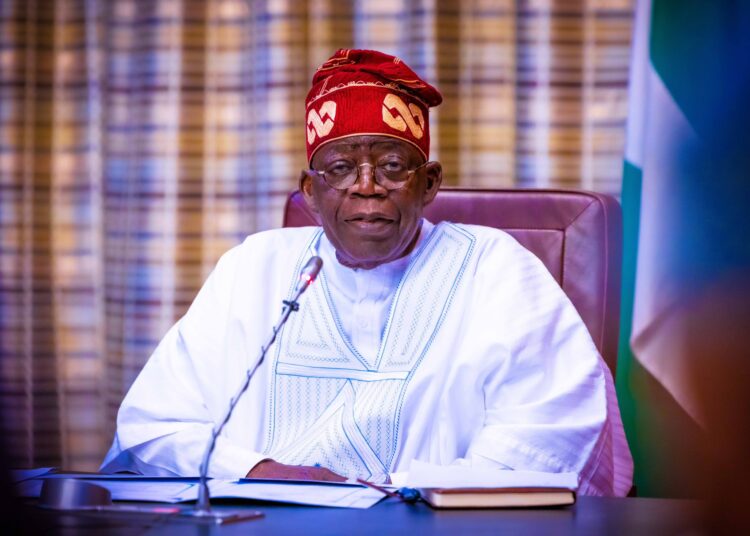
President Bola Tinubu has defended his administration’s proposed fresh external borrowing, arguing that investments in critical infrastructure are necessary to achieve Nigeria’s ambition of becoming a $1 trillion economy by 2030.
The President’s position has, however, attracted criticism from the Nigeria Labour Congress (NLC) and opposition figures, who have questioned the need for additional loans despite increased government revenue and rising crude oil prices.
Tinubu presented his arguments in an essay titled From Reforms to Delivery: Our Infrastructure Investment and Growth Strategy, as the Federal Government seeks National Assembly approval for external borrowing facilities of $20.52bn and €1.045bn under its 2026–2027 Supplementary External Borrowing Rolling Plan.
He maintained that the value of borrowing should be determined by the economic benefits it generates, rather than the amount raised.
According to him, investments in roads, electricity, rail transportation and commercial ports would improve productivity, create employment, strengthen trade and encourage private-sector investment.
Among the major projects identified by the President are the Lagos-Calabar Coastal Highway, Sokoto-Badagry Superhighway, Trans-Sahara Superhighway, electricity grid upgrades and the modernisation of commercial ports in Lagos.
Tinubu projected that the Lagos-Calabar Coastal Highway could reduce logistics expenses along its route by between 15 and 20 per cent and contribute as much as two per cent to Nigeria’s Gross Domestic Product through increased commercial, tourism and industrial activities.
He also estimated that the project could provide approximately 100,000 direct jobs in construction and engineering, with another 150,000 indirect employment opportunities in logistics, building materials and related industries.
The President said infrastructure development, alongside investments in healthcare, education and vocational training, would help connect economic centres, improve market access and unlock the country’s agricultural and industrial potential.
He argued that Nigeria could not achieve its projected economic expansion with infrastructure designed for a much smaller economy.
Tinubu also highlighted improvements in economic indicators following the removal of petrol subsidy, foreign exchange market reforms and other fiscal measures introduced since he assumed office in May 2023.
He said the economy recorded real GDP growth of 4.43 per cent in the second quarter of 2026, while inflation declined to 14.63 per cent in September from 20.98 per cent in the corresponding period of the previous year.
He further disclosed that gross external reserves stood at $55.1bn as of October 9, including approximately $46bn in net reserves, while the country’s tax-to-GDP ratio increased from seven to 12.5 per cent.
The President argued that improved economic fundamentals and stronger international confidence had enhanced Nigeria’s capacity to secure long-term financing at more favourable rates.
He added that the administration intended to channel borrowed funds into productive investments rather than using them to meet immediate fiscal obligations. He also maintained that longer repayment periods would help align debt obligations with the lifespan and economic returns of infrastructure projects.
However, organised labour has questioned the justification for seeking additional loans.
President of the Nigeria Labour Congress, Joe Ajaero, expressed concern that the government was continuing to borrow from international financial institutions despite reporting increased revenue following the removal of petrol subsidy.
Speaking on Channels Television’s The Morning Brief, Ajaero argued that the administration needed to explain why additional external financing was necessary when more revenue was reportedly accruing to the Federal Government and state governments.
He also pointed to the rise in international crude oil prices, noting that Nigeria’s 2026 budget was based on an oil benchmark of $70 per barrel, while prices had reportedly exceeded $100 amid tensions involving the United States and Iran.
The labour leader questioned whether the improved oil earnings should not prompt a reassessment of the country’s borrowing requirements.
Although he acknowledged that the NLC had no constitutional authority to approve or reject government loans, Ajaero urged Nigerians and the National Assembly to scrutinise the proposal and demand accountability.
Similarly, Paul Ibe, media aide to former Vice President Atiku Abubakar, called for the publication of comprehensive details of the proposed borrowing, including the projects involved, their costs, financing arrangements and repayment schedules.
Ibe argued that describing borrowed funds as investments did not remove the government’s obligation to repay the principal and interest.
He requested a breakdown of the 46 proposed projects across 11 sectors, including their locations, implementing agencies, procurement arrangements and expected completion dates.
He also raised concerns about the financing costs, citing an estimated average interest rate of 2.1 per cent for the proposed $5bn World Bank component and an indicative rate of 7.8 per cent for the commercial borrowing component.
Ibe further questioned how Nigeria would meet its repayment obligations if crude oil earnings declined, the naira weakened or projects experienced implementation delays.
He called for the publication of feasibility studies and independently assessed costs for major infrastructure projects, including the Lagos-Calabar Coastal Highway, Sokoto-Badagry Superhighway and Kano-Kaduna rail project.
The National Democratic Congress (NDC) Presidential Campaign Council also cautioned against further borrowing, warning that the country’s growing debt obligations could place additional pressure on future generations.
In a statement signed by its spokesperson, Dr Chiogo Constance Ikokwu, the council said Nigeria’s external debt increased from $43.16bn in June 2023 to $54.52bn in June 2026, representing a rise of $11.36bn or 26.3 per cent.
It also claimed that total public debt rose from N87.38tn to N166.79tn within the same period, an increase of approximately 90.9 per cent.
The council estimated that the latest borrowing proposal, together with previously approved but undrawn facilities, could push Nigeria’s potential external debt exposure to about $81.96bn if all the funds were eventually accessed and there was no overlap in the figures. It clarified that the projection was illustrative and did not represent officially recorded outstanding debt.
While recognising the importance of borrowing for national development, the opposition group questioned whether previous loans had produced sufficient improvements in infrastructure, electricity supply and public services.
It urged the President and the National Assembly to make public a comprehensive record of external loans obtained since May 2023, showing the amounts borrowed and disbursed, repayment conditions, project locations, implementation progress and independently verified results.
Meanwhile, Vice President Kashim Shettima has called for greater government responsiveness to public concerns over the administration’s economic reforms.
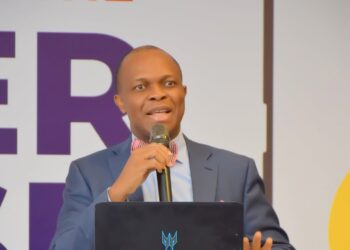
Shettima, represented by his Special Adviser on Economic Affairs, Dr Tope Fasua, spoke at The Duke’s Masterclass 2026 in Abuja, where he defended the removal of petrol subsidy, foreign exchange liberalisation, fiscal restructuring and revenue mobilisation.
He described the measures as necessary interventions to address longstanding economic weaknesses and strengthen Nigeria’s productive capacity.
However, he acknowledged that successful economic reforms required more than policy implementation, stressing the importance of transparent communication, measurable progress and public engagement.
The Vice President urged the government to explain its policies more effectively, provide credible evidence of results and pay closer attention to the experiences of ordinary Nigerians.
He also identified unreliable electricity, transportation challenges, insecurity, limited access to credit and weaknesses in education and public institutions as major obstacles to economic development.
Shettima called for increased domestic production, stronger export capacity and greater support for small businesses, particularly those owned by women and young people, as well as enterprises operating in rural communities.