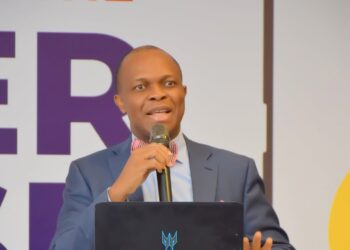
Former Imo State Governor, Rochas Okorocha, has expressed confidence that President Bola Tinubu will secure between 25 and 30 per cent of the votes in the South-East during the 2027 presidential election.
Okorocha, who is also an Imo West senatorial candidate, said the region’s support for Tinubu would improve significantly from its performance in the 2023 election, when the President reportedly received about five per cent of the votes cast in the zone.
He spoke in Abuja on Tuesday after his inauguration as National Grand Patron of Grassroots Advocacy for Tinubu 2027, a political support group working towards the President’s re-election.
The former governor attributed his optimism to the involvement of political leaders, including himself, in mobilising support for Tinubu across the South-East.
He said the proposed political alignment was part of a broader strategy to build relationships that could strengthen the prospects of an Igbo presidential candidate in a future election.
Okorocha described the arrangement as a strategic alliance, insisting that supporting Tinubu did not amount to abandoning or rejecting any South-East aspirant in the 2027 presidential contest.
According to him, the region’s political calculations should extend beyond immediate electoral interests to consider possible benefits in future contests.
He also appealed to voters in Northern Nigeria, particularly the North-West, to support Tinubu’s second-term ambition in appreciation of the President’s role in securing the emergence of the late Muhammadu Buhari as president in 2015.
Okorocha recalled that Tinubu had subordinated his own presidential ambition at the time and deployed his political structures to support Buhari’s candidacy.
He further noted that Tinubu maintained his relationship with Buhari during the latter’s period of ill health, arguing that the North should reciprocate the political support.
The former governor, who described himself as a founding member of the All Progressives Congress (APC), also claimed responsibility for suggesting the party’s name during a meeting of governors in Lagos.
He explained that his proposed name had two symbolic meanings: the APC pain-relief tablet, which he associated with finding solutions to Nigeria’s challenges, and the need to strengthen the country’s response to the Boko Haram insurgency.
Okorocha urged members of the support group to promote the APC identity and its broken-shackle symbol, noting that Tinubu’s name would not appear on the ballot paper.
He also assured those working towards the President’s re-election that their contributions could be recognised through appointments.
Speaking at the event, the group’s National Coordinator, Professor Ochugudu Ipuele, said Okorocha’s grassroots network and political influence informed the decision to appoint him to the position.
Ipuele claimed that the organisation had more than seven million members across the 36 states and the Federal Capital Territory, with operational structures extending to local government areas and polling units.
He said the group had established a reporting system through which its grassroots members could communicate directly with the national secretariat, submit field reports and raise complaints.
Ipuele described Okorocha as an influential grassroots politician whose political reach could help translate the group’s mobilisation efforts into electoral support for Tinubu.