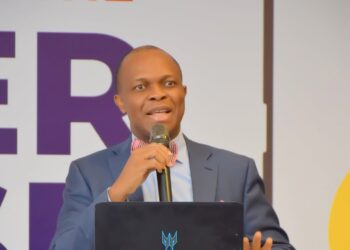
The presidential candidate of the Nigeria Democratic Congress (NDC), Peter Obi, has criticised President Bola Tinubu’s leadership, questioning his capacity to address Nigeria’s mounting challenges and insisting that the country needs a change of government.
Obi also warned against electoral manipulation ahead of the 2027 general elections, declaring that his party would oppose any attempt to undermine the credibility of the polls.
He spoke on Monday in Abuja at a dinner organised to present certificates of return to the NDC’s candidates for the forthcoming elections.
The former Anambra State governor accused the Tinubu administration of failing to demonstrate the competence, commitment and compassion required to tackle the country’s problems. He also questioned the President’s ability to provide the level of leadership he considered necessary to address Nigeria’s electricity crisis and other national concerns.
Obi urged Nigerians to support a new political direction, promising to campaign across the country, including every senatorial district.
He also cautioned against the alleged intimidation of NDC supporters, saying his preference for peaceful conduct should not be mistaken for weakness. He called on political actors to allow democratic participation without harassment or violence.
At the party’s National Executive Committee meeting, NDC National Chairman Moses Cleopas urged members to support all candidates contesting under the party’s platform rather than backing only those they personally favoured.
Cleopas argued that the party’s chances of implementing its policies would depend partly on securing substantial representation in the National Assembly and other elected offices.
He warned that members who supported Obi for president but campaigned against the party’s governorship, legislative or other candidates could face disciplinary measures under the party’s constitution.
The chairman said party unity would be essential to the success of the presidential ticket comprising Obi and his running mate, Rabiu Kwankwaso.
The party’s national leader, Seriake Dickson, said the NDC was established to provide an alternative to the ruling All Progressives Congress (APC) and prevent Nigeria from drifting towards a one-party system.
Dickson criticised the APC’s record on security, corruption and economic management, arguing that the ruling party had failed to meet key promises made when it assumed power in 2015.
He expressed confidence in the NDC’s electoral prospects, describing its candidates as capable of offering Nigerians a different approach to governance.
The party also disclosed that it recorded revenue of ₦8.53bn during its first eight months following registration, with ₦6.13bn remaining after reported expenditure of ₦2.40bn.
The National Treasurer, Dr Peter Onigah, presented the figures on the sidelines of the party’s third NEC meeting. He attributed the financial position to prudent management and said the party intended to account for its transactions transparently.
Onigah appealed to members and supporters to contribute towards funding the party’s operations, noting that it was still developing its organisational structures and had no elected officials in government.
Senator Victor Umeh commended the leadership for presenting its financial statement but said additional funding would be required to support the party’s campaigns and other activities ahead of the elections.
In another development, the NDC inaugurated its newly acquired national secretariat in the Jabi area of Abuja. The facility is expected to serve as its presidential campaign headquarters as preparations for the 2027 elections intensify.
The party also inaugurated its National Campaign Council, with Dickson as chairman and Obi as co-chairman. Cleopas was named vice-chairman, while Kwankwaso was appointed co-vice-chairman.
Other appointments included former Secretary to the Government of the Federation Babachir Lawal as chairman of the National Advisory Council, alongside former Deputy Senate President Ovie Omo-Agege, political economist Pat Utomi and former Congress for Progressive Change National Secretary Buba Galadima.
Ibrahim Abdulkarim was named Director-General of the campaign council, while Ikenna Enekweizu, the party’s National Secretary, was appointed council secretary.
The NDC was registered by the Independent National Electoral Commission on February 5, 2026, following a Federal High Court order. Since then, it has positioned itself as an opposition platform ahead of the 2027 general elections.
However, the unveiling of its campaign council attracted criticism from the Obi-Kwankwaso Movement, whose Director-General, John Ughulu, questioned the party’s preparedness and grassroots mobilisation.
Ughulu argued that the NDC had taken too long to establish its campaign machinery and claimed that the movement had built a stronger organisational network.
He predicted that some members of the NDC campaign council might eventually seek the movement’s support, insisting that electoral ambition alone would not guarantee success without effective coordination and grassroots structures.
The disagreement highlights growing tensions over campaign organisation and the role of political support groups in mobilising voters for the Obi-Kwankwaso ticket ahead of the 2027 elections.