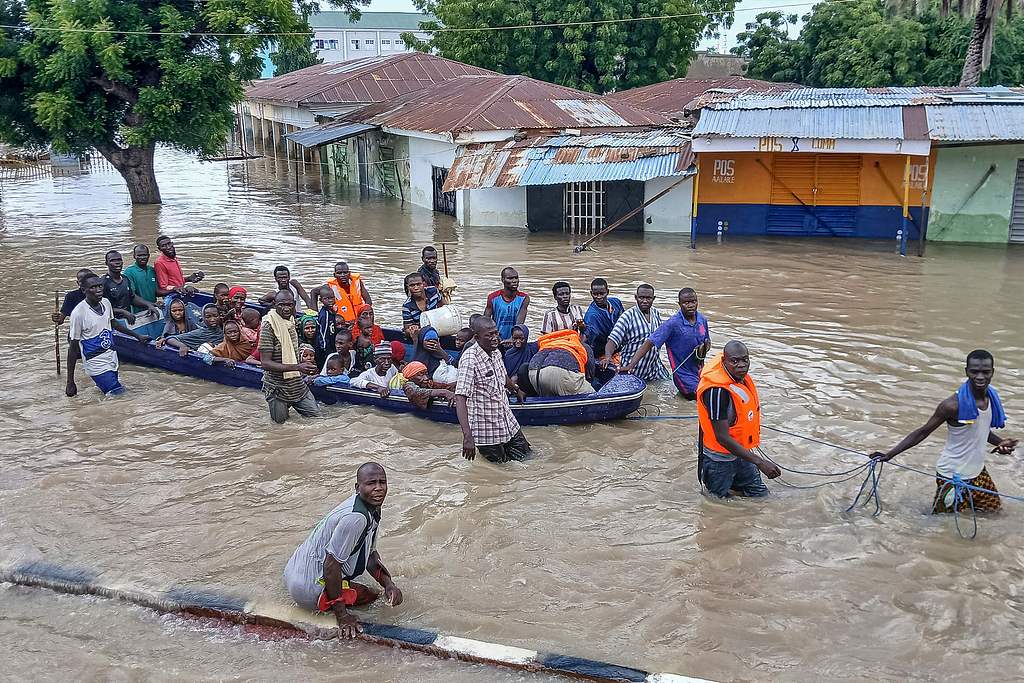
The National Emergency Management Agency (NEMA) has reported 245 deaths and the displacement of 214,997 people following flooding across 28 states in Nigeria.
The agency said 673,350 people had been affected by the disaster in 134 local government areas as of October 20, 2026, highlighting the need for improved emergency response and stronger coordination among relevant institutions.
NEMA Director-General, Zubaida Umar, disclosed the figures at the National Emergency Coordination Forum held at Ajuji Greenwich Hotel in Abuja. She was represented at the meeting by the agency’s Director of Planning, Research and Forecasting, Godwin Topikor.
Umar said the scale of the disaster required stakeholders to assess existing interventions, identify weaknesses in response efforts and improve collaboration to protect affected communities.
She also called for increased surveillance, faster information sharing and coordinated measures to address potential public health emergencies, particularly in communities affected by the floods.
According to the agency, displacement, inadequate sanitation and restricted access to essential services could expose affected populations to additional health risks.
The forum also examined preparedness for the anticipated 2026/2027 El Niño phenomenon, with Umar urging relevant institutions to align climate forecasts with risk assessments and early-warning systems to enable timely preventive action.
She stressed that effective disaster management depended on coordinated efforts across sectors, covering early warning, preparedness, risk reduction, emergency response and long-term recovery.
The NEMA chief further urged participating organisations to avoid duplicating efforts and prioritise vulnerable groups, including women, children, older people and persons with disabilities.
The meeting brought together representatives of government ministries, departments and agencies, security organisations, humanitarian bodies and development partners to assess disaster risks and strengthen national preparedness.
Discussions covered the current flooding situation, cholera developments, the possible hydrological effects of El Niño and global and regional climate forecasts.
Participants also reviewed response priorities in food security, healthcare, education, water and sanitation, nutrition, protection, emergency shelter, logistics, security and information management.
In his welcome address, the Deputy Director of Planning, Research and Forecasting at NEMA, Tony Ephraim, urged participants to identify operational shortcomings, improve information exchange and develop practical recommendations for strengthening the country’s emergency management system.
The agency said the forum was intended to improve coordination, align sectoral response plans and strengthen preparedness for ongoing emergencies and potential future disasters.