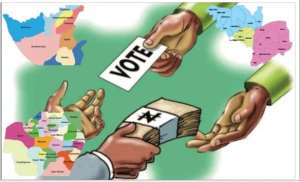
There is something profoundly troubling about a political culture in which the price of winning an election appears to have become increasingly detached from the quality of ideas, the credibility of character and the capacity to govern. In Nigeria, the tragedy of democracy is not merely that politicians make promises they struggle to fulfil. It is that the relationship between the political class and the electorate is too often reduced to a transaction in which money, foodstuffs, temporary relief and the promise of personal favours compete with the public interest. The ballot, which ought to be an instrument for choosing the direction of a nation, is in danger of becoming a marketplace where the immediate needs of the hungry are traded for the long-term interests of millions.
This is the curse of transactional politics: the systematic reduction of citizenship to patronage, public service to private advantage, and political leadership to an investment expected to yield personal returns. It is a system in which the politician approaches the electorate not primarily as citizens whose welfare must be protected, but as a collection of interests to be negotiated, persuaded, rewarded or purchased. The voter, in turn, is sometimes encouraged to regard election day not as an opportunity to determine the future of the country, but as an occasion to collect whatever material benefit is available before the next four years of uncertainty begin.
The evidence that this problem is more than a matter of public perception is difficult to ignore. A 2024 report by Nigeria’s National Bureau of Statistics, titled Corruption in Nigeria: Patterns and Trends, found that 22 per cent of citizens surveyed said they had personally been offered money in exchange for their votes before or during the 2023 general elections. Another nine per cent reported being offered a different favour. Among those who received such offers, 40 per cent said the inducement influenced their voting choice. These figures expose a troubling dimension of electoral politics in which the democratic mandate can be influenced by the purchasing power of candidates rather than the persuasiveness of their programmes.
The implications extend beyond the polling station. When political competition is dominated by financial inducements, the quality of governance is placed at risk before the winner even assumes office. Campaigns become expensive contests in which candidates must mobilise resources to secure loyalty, sustain political networks and satisfy influential interests. Once elected, some officeholders face pressure to recover campaign expenditure, reward benefactors, accommodate political allies and finance the machinery required to retain power. Public resources, which should be deployed to improve schools, hospitals, roads, electricity and employment, can consequently become vulnerable to competing private and political demands.
This is how transactional politics reproduces itself. The politician buys access to power, power provides access to public resources, and public resources become instruments for sustaining the political network that protects the politician. The electorate, meanwhile, receives occasional distributions of rice, cash, cooking oil or other necessities while remaining exposed to the structural failures that make such handouts attractive in the first place. The cycle is self-perpetuating because the conditions of hardship that make inducement effective can also become the conditions through which political dependence is maintained.
Yet it would be unfair to place the entire burden of this dysfunction on the Nigerian voter. A person who has struggled to feed a family, pay rent, obtain medication or send children to school may understandably find it difficult to reject money offered during an election. Poverty narrows the horizon of choice. When tomorrow is uncertain, the value of a bag of rice today can become painfully immediate. This is not necessarily evidence of a population without political consciousness; it may instead reveal the depth of a social and economic crisis in which survival competes with citizenship.
Research published by Chatham House on vote-selling in Nigeria has similarly linked the practice to economic hardship, distrust in political institutions and the widespread perception that citizens receive little meaningful benefit from the democratic process. The paradox is that many Nigerians disapprove of selling their votes even while believing that the practice is common in their communities. The problem, therefore, is not simply an absence of moral instruction. It is a political environment in which citizens have insufficient confidence that their votes will produce accountable government and tangible improvements in their lives.
The responsibility for changing this culture rests heavily on political parties and their candidates. A party that distributes food to secure votes but fails to articulate a credible programme for agricultural development has confused relief with policy. A candidate who hands out cash to a community without explaining how the community will gain access to healthcare, education, clean water and productive employment has substituted a temporary gesture for a governing philosophy. There is nothing inherently wrong with providing assistance to vulnerable citizens. The distinction lies in whether assistance is delivered transparently as part of a sustained social protection programme or deployed strategically to influence electoral behaviour.
The same transactional logic operates beyond the electorate. Political parties are frequently sustained by networks of influential financiers, godfathers, loyalists and aspirants whose expectations may extend well beyond the ordinary requirements of democratic participation. In such an environment, political influence can become a commodity exchanged for appointments, contracts, access to public institutions and control of lucrative areas of government. Positions that ought to be filled according to competence, integrity and the needs of the public may instead be treated as rewards for loyalty or instruments for balancing private interests.
The consequences are serious. A public appointment is not a personal gift from a president, governor or party leader. It is a responsibility entrusted to an individual on behalf of the people. When appointments are treated as political compensation, the question of who is best qualified to serve can become secondary to who helped secure power. Institutions then risk becoming extensions of political patronage rather than instruments of public administration. The cost is borne by citizens who depend on competent officials to deliver services, enforce regulations and manage public funds responsibly.
Transactional politics also weakens political parties as institutions. A party built principally around the distribution of benefits may struggle to maintain a coherent ideology, consistent policy positions or internal democratic discipline. Defections, shifting alliances and sudden changes of political allegiance become easier to understand when viewed through the prism of personal advantage. Where loyalty is primarily transactional, conviction becomes negotiable. Political actors can abandon yesterday’s principles for tomorrow’s opportunity, leaving voters to wonder whether the competition is about competing visions for Nigeria or merely competing access to the machinery of state.
Against this background, the public discussion surrounding Peter Obi’s tenure as governor of Anambra State deserves serious attention. Between 2006 and 2014, Obi developed a reputation among many supporters for fiscal restraint, attention to public expenditure and an emphasis on saving and investment. His record has become central to a broader argument about whether Nigeria can cultivate a political culture in which public office is treated as a trust rather than a personal opportunity.
Obi and his supporters have repeatedly presented his stewardship of Anambra as evidence that government can exercise restraint, preserve public resources and direct attention towards long-term development rather than immediate political gratification. His reputation for financial prudence has consequently become an important part of his public identity. For those who regard him as a departure from the prevailing political culture, the attraction lies not merely in the promise of a different set of policies, but in the proposition that a different relationship with public money is possible.
The significance of this argument should not be underestimated. In a country where allegations of corruption and the diversion of public resources have repeatedly damaged public confidence, the expectation that a leader should protect the public purse is hardly an extraordinary demand. It is the minimum obligation of public office. Nevertheless, when citizens have grown accustomed to political leaders treating government as an avenue for private enrichment, a credible commitment to financial restraint can become a defining feature of a political alternative.
It is tempting, therefore, to present Obi as an absolute exception to Nigeria’s transactional political culture. His supporters may reasonably point to his record and public statements as grounds for that assessment. But intellectual honesty requires a distinction between a reputation for prudence, documented financial decisions and the broader claim that any political leader has been entirely free of controversy. Anambra State officials have raised questions about aspects of Obi’s financial legacy, including liabilities and the handling of funds. Those allegations have been disputed in the wider political debate and require examination against documentary evidence. They should neither be treated as established proof of wrongdoing nor dismissed without scrutiny.
This qualification does not invalidate the larger question his record raises. Rather, it strengthens the case for demanding evidence, transparency and independent scrutiny from every politician, including those whose supporters regard them as different. If Nigeria is to move beyond personality-driven politics, integrity cannot depend solely on public declarations or the loyalty of admirers. It must be demonstrated through verifiable accounts, transparent procurement, credible audits, proper documentation of public assets and liabilities, and institutions capable of investigating allegations without fear or favour.
The real test of political leadership is not whether a politician claims to be incorruptible, but whether the systems under that politician make the misuse of public resources difficult to conceal and costly to undertake. The same standard must apply to presidents, governors, legislators, party officials and public servants. A leader’s reputation matters, but institutions must be strong enough to protect public resources even when a leader’s personal reputation is contested.
There is, however, a deeper lesson in the public interest surrounding Obi’s approach to governance. Nigerians are entitled to expect politicians to demonstrate that public money can be managed with discipline and that government can pursue development without turning every public decision into an opportunity for political reward. Whether one agrees with Obi’s policies or questions aspects of his record, the demand for accountable stewardship is legitimate and should be universal. It is a demand that no political party should be allowed to monopolise in rhetoric while escaping it in practice.
The challenge is to transform this expectation into a national political standard. Citizens must look beyond the immediate attraction of campaign gifts and ask what candidates intend to do about the conditions that make those gifts necessary. How will they expand employment? What practical measures will improve primary healthcare and public education? How will they make electricity more reliable, strengthen local enterprise and protect public funds? What mechanisms will prevent political financiers from exercising undue influence over appointments and contracts? These are not academic questions. They are the questions that determine whether an election changes the circumstances of ordinary people or merely changes the occupants of public offices.
Political parties, for their part, must demonstrate that they can recruit and nominate candidates on the basis of competence, integrity and a credible public programme. Their financial arrangements should be transparent, their internal processes accountable and their appointment practices guided by the requirements of effective governance. Electoral institutions and law enforcement agencies must also apply existing rules against vote-buying consistently, regardless of the identity or political strength of the accused. Without credible consequences, the transaction will remain attractive to those who can afford it.
The electorate must equally reclaim its place in the democratic process. A vote is not a favour to a candidate, and it is not a commodity whose value expires when the ballot box closes. It is an instrument through which citizens confer authority and demand accountability. Accepting a campaign gift does not necessarily mean a voter has surrendered the right to make an independent choice, but a political culture built around such inducements makes it more difficult for public policy to take precedence over private desperation. Citizens deserve a democracy in which they do not have to choose between immediate relief and a better future.
Ultimately, Nigeria’s problem is not simply that politicians distribute money and food during elections. It is that a political economy of scarcity and patronage can make these transactions appear more valuable than the promises of institutions, social protection and economic opportunity. The solution cannot be reduced to condemning voters or celebrating individual politicians. It requires a fundamental reorientation of political competition, public finance, party organisation and civic expectations.
Peter Obi’s record in Anambra remains part of this national conversation because it raises an important question: can political leadership be judged by its stewardship of public resources rather than by the resources it distributes to secure loyalty? That question deserves more than partisan applause. It demands evidence, scrutiny and a standard of accountability that applies to everyone.
Nigeria cannot build a durable democracy if political loyalty is continually purchased, public appointments are treated as rewards and the public treasury becomes an instrument for sustaining private networks. The country needs a politics in which food security is achieved through productive agriculture, not occasional campaign handouts; in which employment is created through economic opportunity, not patronage; and in which public office is understood as a responsibility to citizens, not a prize to be recovered through access to public funds.
The ultimate measure of political success should not be how much money a candidate distributes before an election, how many influential allies receive appointments afterwards, or how effectively a party sustains its network of loyalists. It should be whether citizens enjoy greater security, dignity, opportunity and confidence in their institutions.
Until Nigeria makes that distinction central to its democratic culture, transactional politics will remain more than a campaign tactic. It will continue to shape the character of governance itself. And the greatest cost will not be the money spent buying votes, but the future that millions of Nigerians are denied when their democracy is reduced to a transaction.