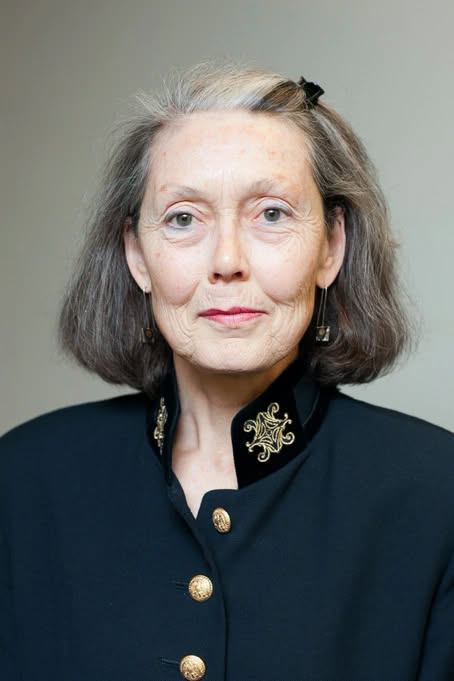
Canadian poet, essayist and classical scholar Anne Carson has been awarded the 2026 Nobel Prize in Literature for a body of work that the Nobel Committee has praised for its originality, experimentation and imaginative engagement with classical literature.
The award recognises Carson’s ability to transform ancient literary traditions into innovative forms that speak to contemporary readers. Her writing frequently moves between poetry, translation, scholarship and other artistic forms, challenging conventional distinctions between literary genres.
Born in Toronto, Canada, in 1950, Carson developed a career that has combined classical scholarship with an enduring commitment to poetry and literary experimentation. She completed her doctoral work in Classics in 1981 with a thesis titled Odi et Amo Ergo Sum. Throughout her career, she has also taught at several universities while producing poetry, translations, essays and hybrid literary works.
Language has remained at the heart of Carson’s creative practice. Her fascination with words, particularly their origins and changing meanings, has provided a foundation for much of her writing. Her engagement with ancient Greek literature has also produced translations that have been widely regarded as creative literary works rather than merely scholarly renderings.
Among her notable translations is If Not, Winter (2002), her interpretation of surviving fragments of poetry by Sappho. She has also produced versions of major Greek tragedies, including Sophocles’ Electra (2001) and Antigone (2015), as well as Euripides’ Bakkhai (2015).
Carson established herself as a distinctive literary voice during the 1990s. Her long poem The Glass Essay, published in Glass, Irony, and God in 1995, demonstrated her ability to stretch the conventional boundaries of poetry by combining different literary modes and forms.
One of her most celebrated works followed in 1998 with Autobiography of Red: A Novel in Verse. The book draws on fragments attributed to the ancient Greek poet Stesichoros and reimagines the myth of Geryon, the winged red monster. Carson combines this classical material with contemporary language and emotional experience, turning an ancient myth into an unconventional modern coming-of-age story.
Experimentation has remained a defining characteristic of Carson’s later work. In Float (2016), she assembled 22 individual chapbooks dealing with different subjects and designed the collection so that readers could approach the pieces in virtually any order. Her 2024 work Wrong Norma similarly brings together a wide variety of texts and incorporates a strong performative dimension.
Carson’s artistic reach has extended beyond literature. Her collaborations with visual artists, choreographers and directors in opera and theatre reflect her willingness to cross disciplinary boundaries and question established expectations about what literature can be.
It is this persistent freedom to experiment, together with her distinctive dialogue with classical tradition, that has made Carson an influential figure in contemporary international literature and art. The 2026 Nobel Prize therefore recognises not only her literary achievement but also her contribution to expanding the possibilities of literary form itself.