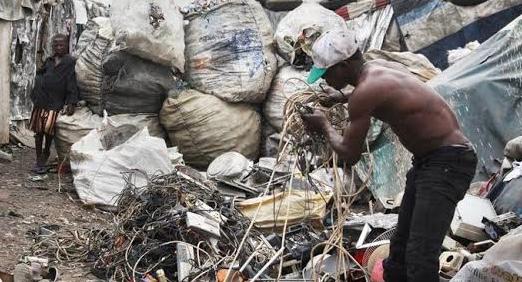
The Federal Government is developing new regulations to sanitise Nigeria’s scrap metal industry, curb the trade in stolen metals and protect critical national infrastructure from vandalism.
The proposed framework will require scrap metal dealers and other operators to obtain appropriate licences, verify the sources of materials they purchase and maintain transaction records to prevent stolen metals from entering the recycling market.
The Minister of Steel Development, Shuaibu Audu, disclosed this during a stakeholders’ meeting in Lagos convened to validate the proposed Scrap Metal (Collection, Trading, Recycling and Regulation) Regulations, 2026.
Audu, who was represented by the Director of the Metallurgical Raw Material Development and Investment Promotion Department, Ime Eprikpo, said the initiative was designed to establish a more organised, transparent and accountable scrap metal value chain.
According to a statement issued by the ministry’s Head of Press and Public Relations, Maureen Tine-Iulun, the proposed regulations are also expected to improve access to locally sourced raw materials for steel manufacturers, formalise the activities of informal operators and strengthen environmental and occupational safety standards.
The minister expressed concern that inadequate regulation of the industry had encouraged the theft and destruction of public and private infrastructure, resulting in economic losses, disruption of essential services and rising maintenance costs.
He, however, stressed that the government’s intention was not to undermine the livelihoods of thousands of Nigerians who depend on scrap metal collection and trading.
“Our objective is not to suppress legitimate commercial activity. Rather, it is to establish a system in which lawful businesses can operate with greater clarity and confidence, while activities involving stolen materials, unsafe practices or environmental harm are addressed through appropriate regulatory and legal measures,” he said.
Audu described scrap metal as an important raw material for steel production, foundry operations and other manufacturing activities. He noted that a properly organised recycling industry could minimise material waste, generate employment and contribute to Nigeria’s industrial development.
He maintained that the sector’s economic potential would remain limited without effective oversight, legitimate sourcing arrangements, safe handling practices and dependable supply channels.
Under the proposed framework, operators would be subjected to a structured licensing and monitoring system. Collection and aggregation centres would also be regulated, while transaction records would be strengthened to ensure that the movement of scrap materials could be traced.
The regulations are further expected to introduce measures to improve environmental protection, occupational safety and enforcement against the illegal acquisition and sale of metallic materials.
Audu identified the theft of electricity cables, railway components, manhole covers and other metal installations as particularly damaging to national infrastructure. He explained that the consequences extended beyond the financial value of stolen materials, as vandalism disrupted public services, endangered lives and increased the cost of maintaining essential facilities.
He consequently called for stronger verification of scrap suppliers, proper documentation of transactions and closer cooperation among regulatory institutions, security agencies and law enforcement authorities.
Addressing concerns about the possible impact of the proposed rules on small-scale operators, the minister said the framework would provide opportunities for informal collectors and traders to formalise their businesses through requirements suited to the scale and risks of their operations.
He added that the government did not intend to introduce unnecessary restrictions on small businesses. However, large-scale aggregation, processing and recycling facilities would be expected to operate under appropriate licensing arrangements and comply with established safety standards.
The minister urged participants at the two-day stakeholders’ engagement to scrutinise the draft regulations and make recommendations on implementation, operational requirements and compliance costs.
He assured them that their contributions would be considered before the regulations were finalised. The ministry, he added, would collaborate with relevant institutions to strengthen enforcement capacity, improve public awareness and enhance data collection across the industry.
In his remarks, the ministry’s Permanent Secretary, Nura Abba Rimi, represented by the Director of the Metallurgical Inspectorate and Environmental Protection Department, Christopher Wanje, described effective regulation of the scrap metal industry as essential to developing a competitive domestic steel sector.
He said the proposed framework would help prevent the circulation of stolen metals, safeguard public and private infrastructure and ensure that the economic benefits of recycling contributed to national development.
Rimi maintained that the objective was to create an accountable and sustainable business environment that would encourage genuine entrepreneurs, attract investment and provide steel manufacturers with reliable access to raw materials.
Also speaking, the National President of the National Association of Scrap and Waste Dealers Employers of Nigeria, Ogbu Luke Uchechukwu, described the validation exercise as a significant development for the country’s steel industry.
He said the engagement represented more than an assessment of a proposed policy document, describing it as an important step towards building a structured, regulated and economically sustainable scrap and waste sector.
The proposed regulations come as the Federal Government intensifies efforts to strengthen domestic manufacturing and expand Nigeria’s steel production capacity. Industry stakeholders believe that properly managed scrap metal recycling could help recover valuable materials, reduce waste and support industrial growth.