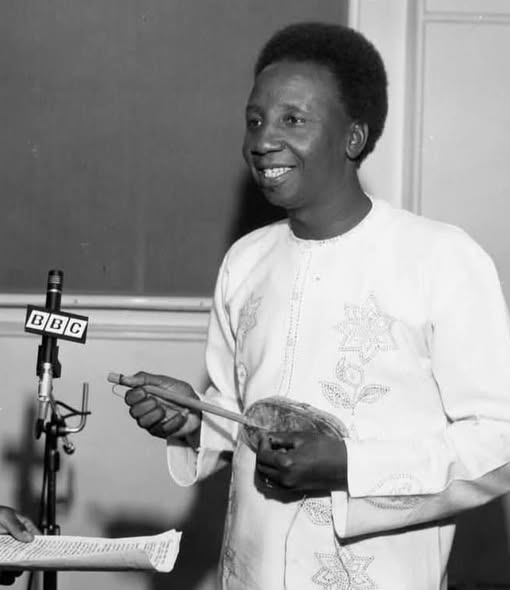
A single string, stretched across a small instrument, carried the weight of an extraordinary musical imagination. In the hands of Dan Maraya Jos, the kontigi became much more than an instrument of entertainment. It was a storyteller, a social commentator and, in many ways, an archive of the experiences of ordinary people. With it, he gave melody to the lives of people whose stories were seldom celebrated, turning everyday struggles, human relationships, humour and communal wisdom into songs that became part of Nigeria’s cultural memory.
Dan Maraya Jos understood the world through the eyes of the people around him. His music was rooted in a tradition in which songs served as vehicles for storytelling, social commentary and the preservation of collective memory. He sang about work, marriage, friendship, responsibility, hardship and the contradictions of society. His lyrics were accessible, but their simplicity often concealed a perceptive understanding of human behaviour and social realities. He gave musical expression to lives that rarely occupied the centre of public discourse.
Born Adamu Wayya in 1946 in Bukuru, near Jos, his early life was marked by tragedy. He lost both parents while he was still an infant. The name Dan Maraya Jos, meaning the little orphan of Jos, became the identity by which generations would know him. His father’s association with music had already placed him close to a rich cultural tradition, and the Emir of Bukuru took him under his care after the death of his parents. What began as a childhood marked by loss became a life of extraordinary artistic accomplishment.
The kontigi, that modest single-stringed lute, became his signature instrument. There was something deeply symbolic about the relationship between the musician and his instrument. He did not need a large ensemble to make his presence felt. The sound of the kontigi, accompanied by his distinctive voice and remarkable gift for dramatic rendition, was enough to hold an audience. He could imitate different voices, introduce humour into his performances and turn familiar situations into memorable musical narratives. His artistry was rooted in the people and their experiences, and that intimacy gave his music a special authority.
Perhaps his most enduring contribution was his decision to sing not only for the powerful but also for ordinary people. In a society where praise singing could easily become an instrument for celebrating wealth, status and political influence, Dan Maraya Jos recognised the dignity of those whose labour kept everyday life moving. His celebrated Wak’ar Karen Mota, which drew attention to the work of bus conductors and their demanding responsibilities, was a tribute to people whose contributions were often overlooked. He understood that the lives of ordinary Nigerians were worthy of poetry, music and recognition.
His music was also a vehicle for moral reflection and social commentary. In Jawabin Aure, he addressed the difficulties of marriage and encouraged couples to resolve their differences. In Auren Dole, he criticised forced marriage and challenged the practice of denying young people a voice in choosing their partners. These were not merely songs designed to entertain. They reflected a musician who understood the influence of popular art on social attitudes and used his platform to speak about issues that affected families and communities.
There was also a national dimension to his music. Although his artistic roots were firmly planted in Hausa culture, his appeal reached beyond the geographical and linguistic boundaries of northern Nigeria. He sang about peace, unity and the shared destiny of a country often troubled by divisions. His music demonstrated that cultural particularity need not be an obstacle to national belonging. One could sing in Hausa, celebrate the traditions of the Plateau and still speak to the conscience of Nigeria. His was a cultural confidence that did not require the abandonment of identity in the pursuit of unity.
The honours he received, including the national awards of Member of the Order of the Niger and Officer of the Order of the Niger, reflected official recognition of a career that had enriched the country’s cultural life. Yet his greatest distinction was perhaps the affection he earned from people who found their own stories in his songs. He was not simply a performer who appeared at important occasions; he was a chronicler of the human condition, a custodian of an oral tradition and a cultural ambassador whose work carried the sounds and sensibilities of his people to wider audiences.
Dan Maraya Jos died in Jos on June 20, 2015, at the age of 69. His passing was a considerable loss to Nigerian music, but it did not silence the voice he had spent a lifetime cultivating. His songs remain part of the cultural memory of a people, and his example continues to remind us that the worth of an artist is not measured only by commercial success or international recognition. It is also measured by the lives represented, the truths preserved and the communities whose experiences are given dignity through art.
Nigeria has produced many celebrated musicians, but Dan Maraya Jos occupied a distinctive place among them. He showed that a single string could carry the weight of a people’s history, that a song could be both entertainment and instruction, and that an artist did not have to sing in the language of the powerful to command national attention. His music was a bridge between generations, between the individual and the community, and between cultural heritage and national identity.
Perhaps the most beautiful irony of his life is that a man whose name recalled the pain of orphanhood became a musical father figure to a vast community of admirers. He turned personal loss into public enrichment and made a lasting contribution to the cultural inheritance of Nigeria.
The kontigi may have fallen silent in his hands, but its music has not disappeared. Somewhere in the memory of Jos, in the rhythms of Hausa folk music and in the hearts of those who still listen, Dan Maraya Jos continues to sing. His was a voice that needed only one string to speak to an entire people. And that is why his music, like the soul it carried, will endure.