


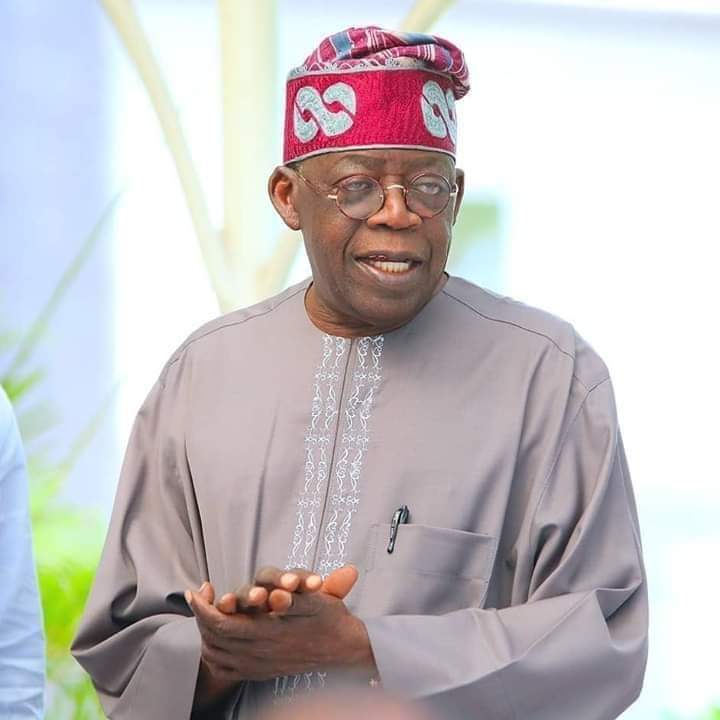
President Bola Tinubu has defended his administration’s decision to remove petrol subsidy, saying he has no regrets about the policy and warning that reversing it would return Nigeria to an unsustainable economic path.
Tinubu spoke on Monday at an event organised by the City Boys Movement in Abuja, where he also urged supporters to promote his administration’s policies and mobilise young Nigerians ahead of the 2027 general elections.
The President said Nigeria was facing severe financial difficulties when he assumed office and could no longer afford the cost of maintaining the subsidy regime.
Declaring that he had no regrets about the decision, Tinubu compared calls for a return to subsidy with asking Moses to lead the Israelites back to Egypt after their liberation from captivity.
He argued that Nigeria must sustain its reform agenda rather than return to policies he considers financially unsustainable. He also maintained that borrowing alone could not guarantee national prosperity, expressing confidence that the sacrifices associated with the reforms would eventually yield benefits for Nigerians.
The President urged members of the City Boys Movement to explain government policies to citizens and encourage greater youth participation in the electoral process.
Meanwhile, the Minister of Finance and Coordinating Minister of the Economy, Taiwo Oyedele, has warned that restoring petrol subsidy could trigger capital flight, undermine investor confidence and place additional pressure on the naira.
Oyedele issued the warning on Monday during a press briefing after the annual meetings of the International Monetary Fund and the World Bank in Bangkok, Thailand.
He said investors remained concerned about whether the administration would maintain its economic policies as the 2027 elections approached.
According to the minister, even a suggestion that the government was considering a return to subsidy could unsettle financial markets, raise borrowing costs and increase economic pressure on households.
He projected that the naira could weaken to between N3,000 and N4,000 to the dollar under such circumstances, arguing that depreciation would make imported petrol more expensive and potentially undermine the intended benefits of subsidy payments.
Oyedele added that capital flight could involve both foreign investors and Nigerian businesses seeking to protect their assets by converting funds into dollars.
However, Kola Ologbondiyan, Director of Media and Publicity of the African Democratic Congress Presidential Campaign Council, challenged the minister to provide evidence supporting the projection.
Ologbondiyan accused the government of using alarming forecasts to discourage public debate about restoring petrol subsidy. He argued that Nigerians deserved to understand the economic assumptions underpinning the minister’s prediction.
He called on Oyedele to publish the model used to arrive at the projected exchange rate, insisting that claims about the consequences of subsidy restoration should be supported by verifiable calculations.
Ologbondiyan maintained that the policy debate should focus on evidence and the likely economic consequences of the available options rather than projections that had not been made public.
The disagreement comes amid continuing debate over the consequences of petrol subsidy removal in May 2023. Higher fuel prices and transportation costs have remained major concerns for households and businesses, keeping the administration’s economic reforms at the centre of national discussions.


